The Storm Before The Summit
A few months ago I travelled to the Arctic to summit an arctic volcano.
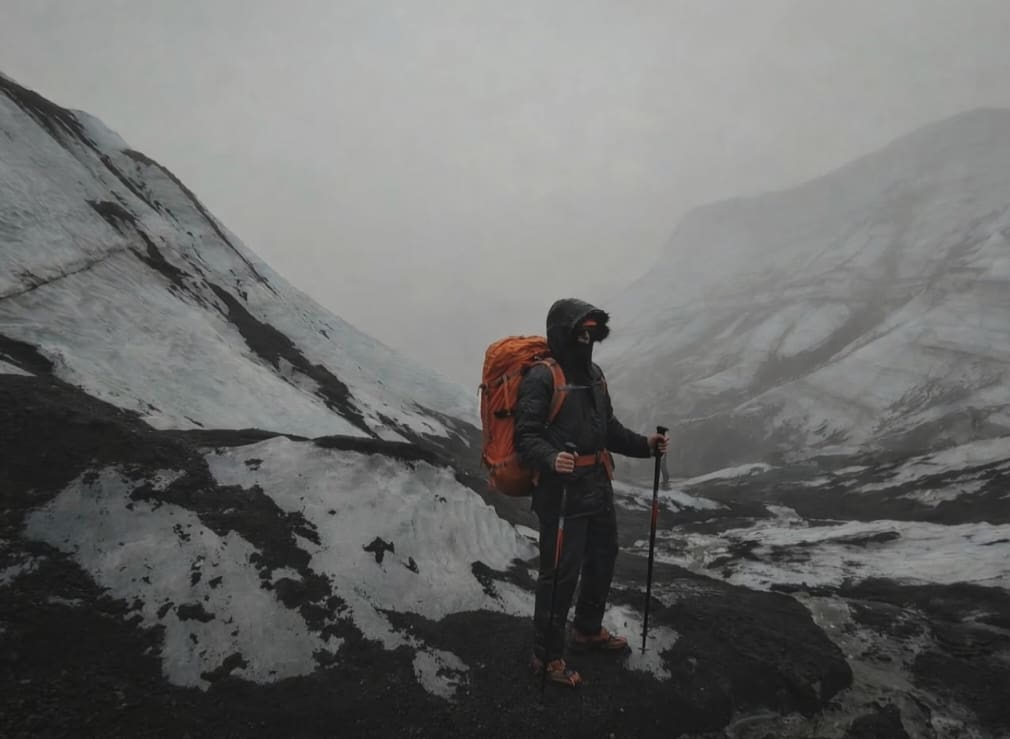
I have always been drawn to summits. I have spent the better part of my adult life climbing things, some of them literal, most of them not. Companies built. Book published. Milestones made. I am, by temperament, a man who believed that the meaning of a life is to be measured in the things one has reached. I had come to the Arctic, I see now, because the volcano was the simplest and most honest form of what I had been doing for years. A high place. A clear summit. Proof, for myself more than anyone else, that I had not yet stopped moving upward.
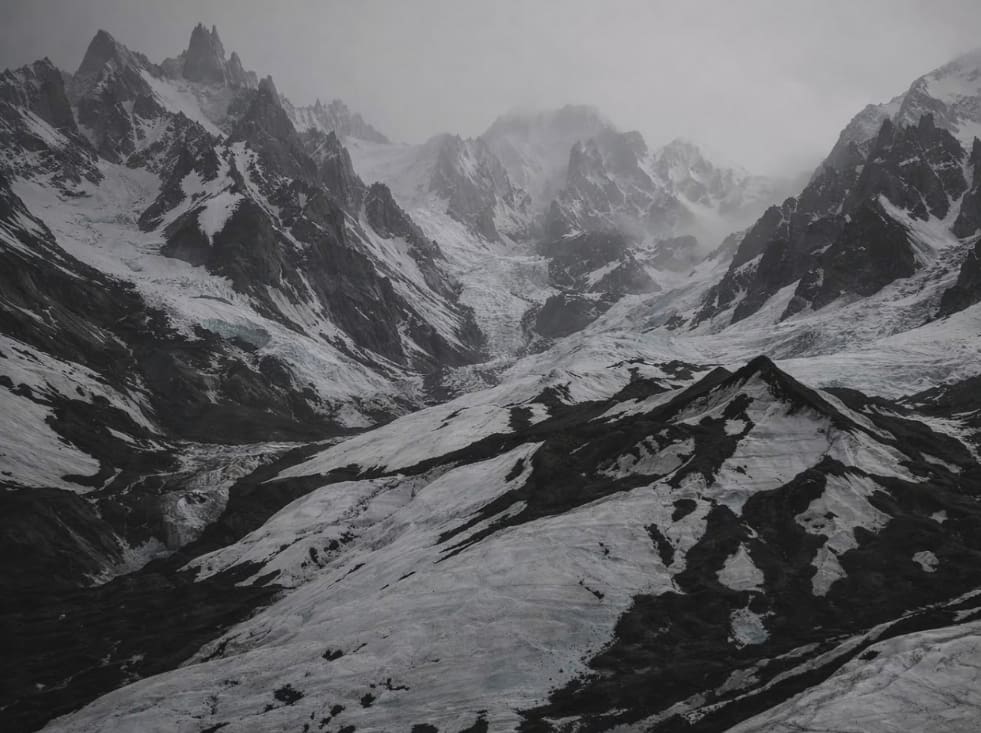
I had planned the trip with some care. I had hired an expedition company, read more than I needed to about the route, trained my body and imagined, in the weeks before leaving home, a particular image of myself at the summit. The sky behind me a certain shade of late afternoon blue. The ice catching the light in the way ice does at altitude. I see now that I had been imagining a great deal.
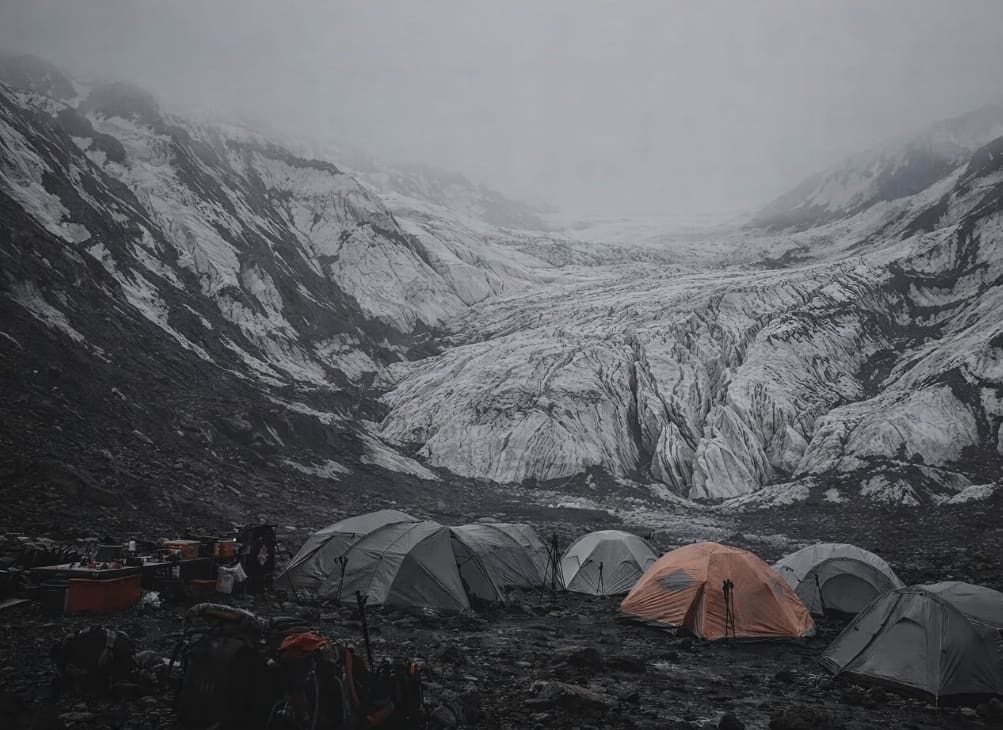
We arrived at base camp on a clear afternoon after a treacherous journey. The light was thin and gold. The volcano stood, in the distance, with the indifferent patience of something that had been there long before us and would be there long after. By evening a unforeseen snowstorm had developed. By morning we were stranded, the forceful wind battling against the tent in long, indifferent passes, the guide explaining in the rugged voice of a man who had explained this many times before that we would not be moving today, and possibly not tomorrow. This was terrible news.
I spent the first hours of that storm in a state I would not, at the time, have admitted to. I had come for the summit. The blizzard was, I told myself, a delay against the plan. I lay in the tent and listened to the wind, and I rehearsed, in the small private way one does in such moments, the disappointment I felt I was already owed.
I am ashamed of this now. I was not ashamed of it then.
The guide came to the tent in the late evening. He was a large, bearded man who looked, if I may be permitted to say so, like a Viking who had grown into a Santa. He spoke quietly, as though there were a child sleeping somewhere nearby. He told me to come outside.
I came outside.
I do not, even now, know quite how to describe what I saw. I had read about the northern lights. I had seen photographs. None of it had prepared me. A slow, unhurried passage of intense green and violet across the sky, moving with the patience of something that had been moving long before anyone had thought to name it. It did not announce itself. It simply moved, the way a thunderbird might move in a story told by someone who had once seen one, and had never quite recovered from the seeing.
I stood in the snow. I did not speak. I was mesmerised. I was touched. I was so overcome with indescribable emotion.
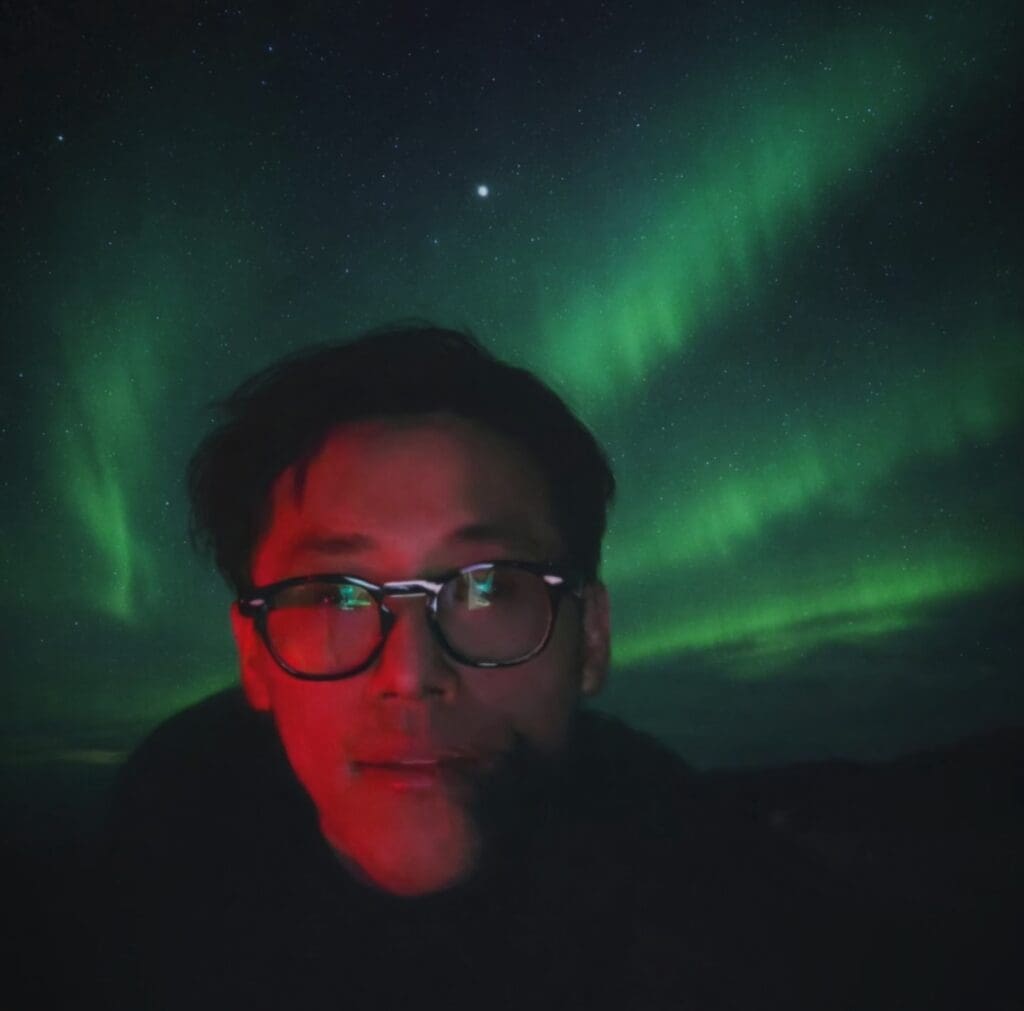
The guide stood beside me for some time. He noticed my reaction, then he said, in a voice so low I almost missed it, the mountain does not always give you what you came for. Sometimes it gives you what you needed.
I have thought about that sentence many times since. I think about it more, in fact, than I think about the lights themselves.
I felt a kind of gratitude. I had not earned it. It had simply arrived in me, without permission, the way certain feelings do when one is past the age at which one expects them. I felt also, I must confess, a small embarrassment. A man in his thirties standing in a snowstorm at the edge of world, feeling what I now understand the philosophers had meant all along when they used the word sublime. I had read the word in my twenties. I had not understood it. I had not, until that night, known that one could not understand it by reading.
The storm subsided in the night. We summited the next morning. The sky was the particular shade of blue I had imagined. The ice caught the light in the way I had hoped it would. I took the photograph.
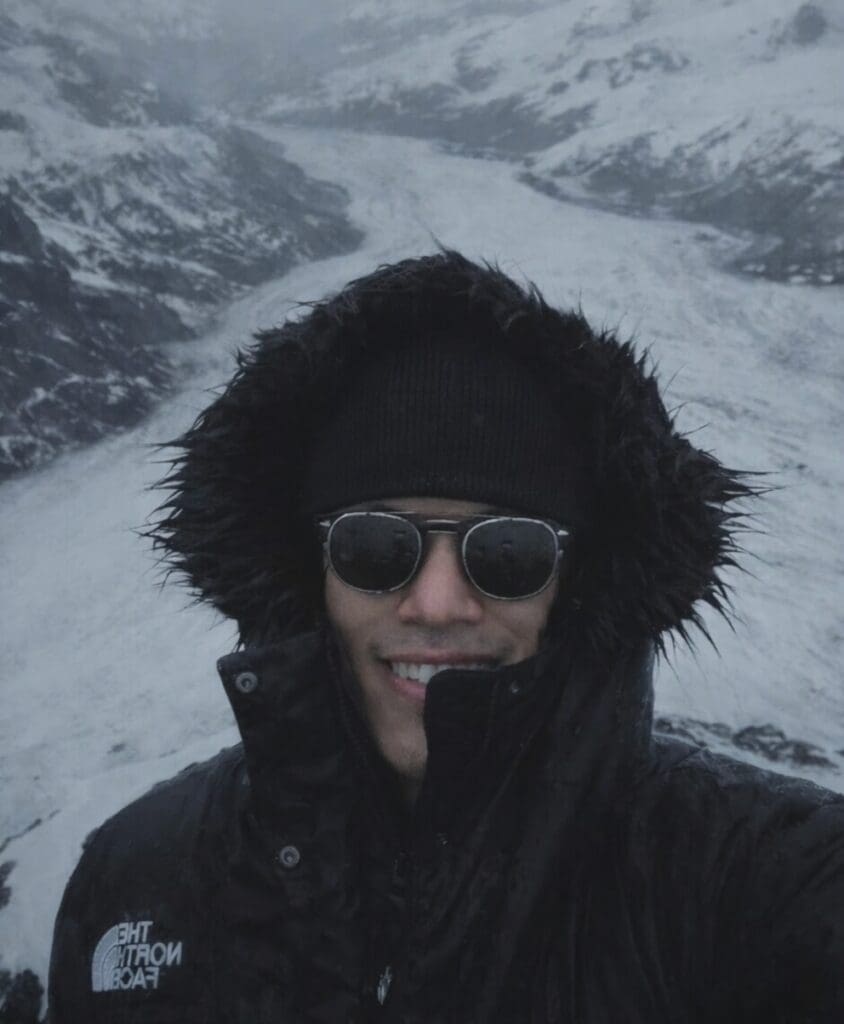
The photograph is the smallest part of what I brought home.
What I brought home was the night before. The wind. The tent. The bearded guide. The slow green river overhead. The small, late discovery that the thing I had travelled across the world to do was not, in the end, the thing I had travelled across the world for.
We organise our lives around summits. We plan the careers, the trips, the milestones. We tell ourselves, with the quiet certainty of people who have never been seriously interrupted, that these are the places where the meaning of a life is to be found. The summits matter. I would not wish to suggest otherwise. But the summits are not, mostly, where life happens. Life happens at base camp, in the hours we did not plan for, when the storm has closed the route we had been climbing toward and a guide we did not choose knocks on the tent and tells us, in the quiet voice of someone who has seen all of this many times before, to come outside.
Most of us are not interrupted often enough. We have built lives sealed against interruption. We lie in our tents and rehearse, as I rehearsed, the disappointment we feel we are already owed. We do not step outside. And then, of course, we wonder, much later, why so much of what we had been promised about meaning never quite arrived.